

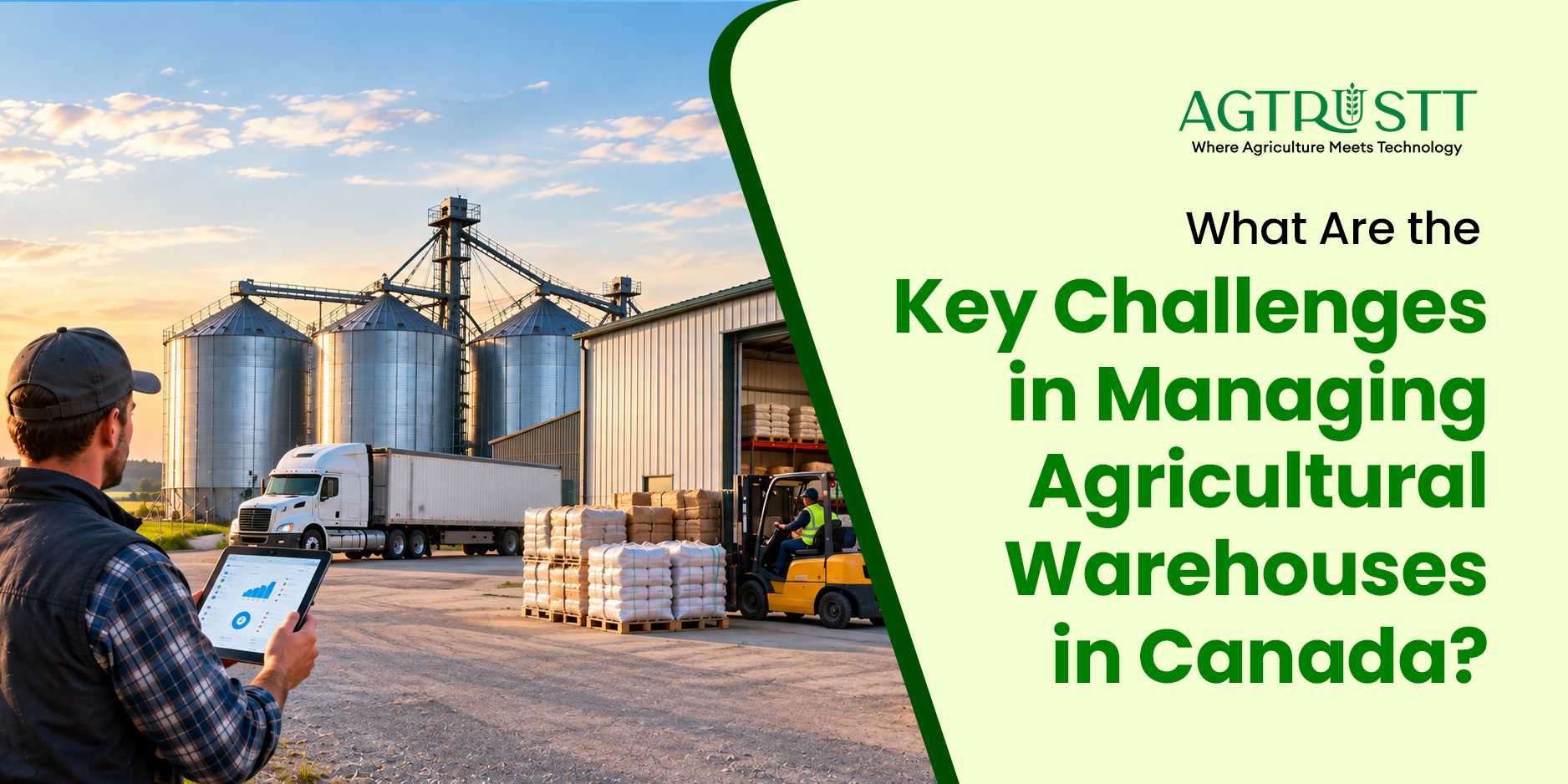
In Canada, often to deal with huge commodities requirement and store management, need efficient process. Often, multiple batches and limited warehouse space can disrupt the operations, leading to make the management challenging. That is when well-connected Digital Agriculture Solutions can be helpful for better control and visibility.
What is the problem with Inventory Management?
It is possible for various commodities, lots, volumes and movements to be processed in one agricultural warehouse, at the same time. Having no visibility of inventory in real time can cause businesses to lack the information to know what’s available, where it’s stored, and when it needs to move.
- Inaccurate stock records
- Limited inventory visibility
- Excess stock accumulation
- Increased wastage risks
An integrated ERP system can overcome these challenges with real-time visibility to inventory at each of the warehouses. Also, it can facilitate material handling and contribute to more intelligent stacking methods.
What are the impact of poor space utilization on warehouses?
Agricultural goods can be of different kinds, batches, and frequency of movement, which makes warehouse organization difficult. Stacking can be inefficient, using space that may be needed for other frequently used products. Agtrustt’s Warehouse Intelligence System relies on AI model Warehouse Planner to optimize warehouse space utilization by stacking and laying out products according to the type, batch, and frequency of their movement.
Why is product traceability a challenge?
When multiple commodities and batches are stored in a warehouse, it can be difficult to monitor agricultural commodities from intake to dispatch. Manual records may not be easy to find or may not provide the history of item movement when needed, making Warehouse Digitization important.
- Difficult batch identification
- Manual tracking processes
- Incomplete movement records
- Limited product visibility
This challenge can be addressed with barcode tracking, which involves marking objects on their life cycle. This provides a digital footprint from warehouse receipt to storage and delivery.
What are the issues with logistics coordination?
Schedules can change and there can be delays, which can make it challenging to coordinate inbound and outbound logistics. The lack of coordination can cause delays, impact warehouse space and hinder planned movement of products. For warehouses, booking management can facilitate in-scheduling inbound and outbound transportation, track delays and enhance the coordination of Warehouse supply chain management in Canada operations.
What are the implications for disconnected operations on efficiency?
If the procurement, production, inventory and warehouse functions are conducted in isolation, companies might not have a full picture of their operations. This can complicate effective coordination of sourcing, processing, inventory and material moves. An integrated ERP can manage the procurement, production and inventory function all in one and offer enhanced process visibility and traceability.
- Centralize procurement processes
- Monitor batch-wise production
- Track material movement
- Connect warehouse operations
Conclusion
Canadian agricultural warehouses may experience issues with inventory management, space optimization, product tracking, logistical coordination, and fragmented workflows. Agtrustt offers solutions that are connected and intended to help farming enterprises Manage Agricultural Warehouses with more visibility into their warehouses, streamline operations, and have more control on procurement to dispatch.